
25,00 €
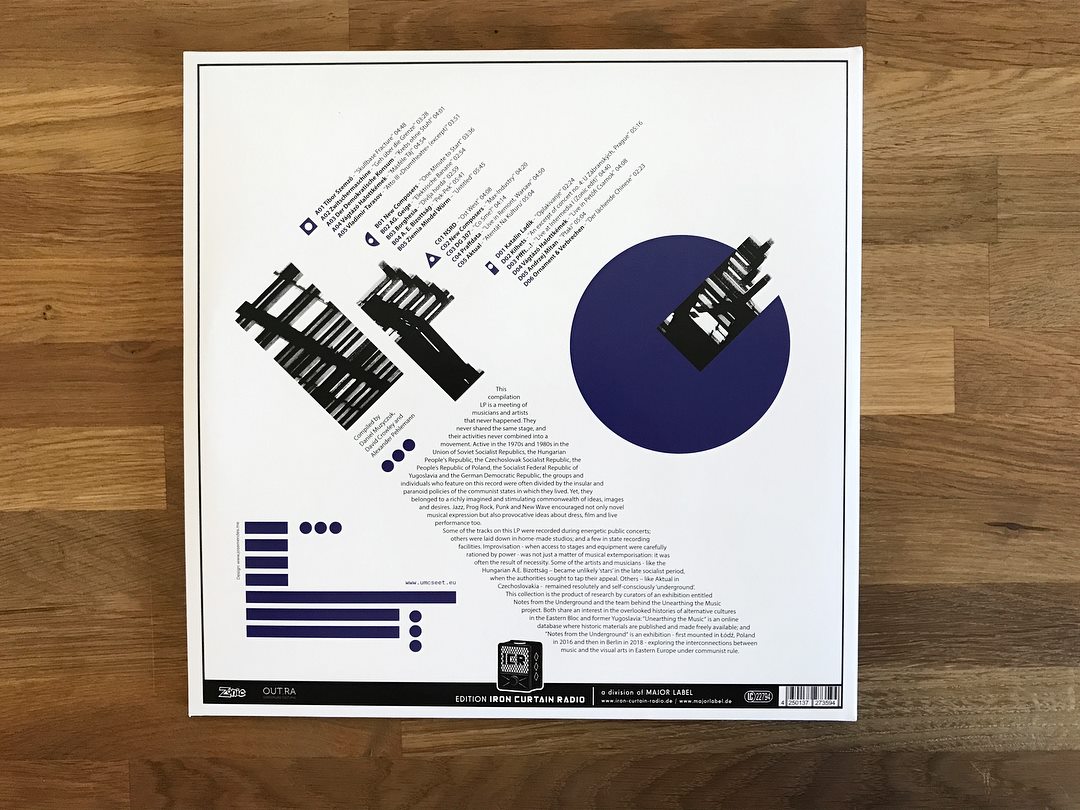
TRACKLIST:
A01 - Tibor Szemzö – ''Skullbase Fractures''
A02 - Zwitschermaschine - ''Geh über die Grenze''
A03 - Der Demokratische Konsum – ''Krebs ohne Stuhl''
A04 - Vágtázó Halottkémek - ''Másféle Táj''
A05 - Vladimir Tarasov - ''Atto III «Drumtheatre» (excerpt)”
B01 - New Composers - ''One Minute to Start''
B02 - AG. Geige - ''Elektrische Banane''
B03 - Borghesia - ''Divlja''
B04 - A. E. Bizottság - ''Pek-Pek''
B05 - Ziemia Mindel Würm – ''Untitled''
C01 - NSRD - ''Ost West''
C02 - New Composers - ''Max-Industry''
C03 - DG 307 - ''Co Sme?''
C04 - Praffdata - ''Live in Remont, Warsaw''
C05 - Aktual - ''Atentát Na Kulturu''
D01 - Katalin Ladik - ''Oplakivanje''
D02 - Kilhets - ''Kilhets''
D03 - Pffft…! - ''Live at Intermedia I (Zonic edit)''
D04 - Vágtázó Halottkémek - ''Live in Petőfi Csarnok''
D05 - Andrzej Mitan, Włodzimierz Borowski, Cezary Staniszewski, Tomasz Wilmanski - ''Ptaki''
D06 - Ornament & Verbrechen - ''Der lächelnde Chinese''
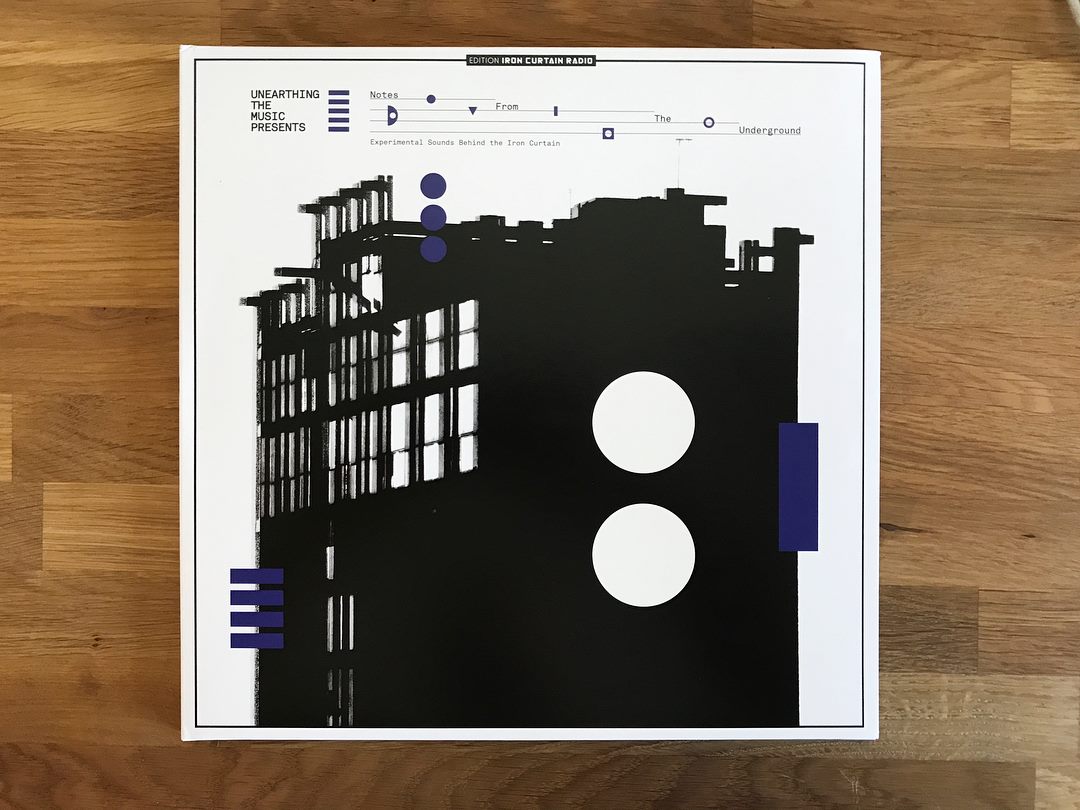
This double LP compilation is a meeting of musicians and artists that never happened. They never shared the same stage, and their activities never combined into a movement. Mostly active in the 1970s and 1980s in the Union of Soviet Socialist Republics, the Hungarian People’s Republic, the Czechoslovak Socialist Republic, the People’s Republic of Poland, the Socialist Federal Republic of Yugoslavia and the German Democratic Republic, the groups and individuals who feature on this record were often divided by the insular and paranoid policies of the communist states in which they lived.
Yet, they belonged to a richly imagined and stimulating commonwealth of ideas, images and desires.
Some of the music was recorded during energetic public concerts; some of it was laid down in home-made studios, and some in state recording facilities. Improvisation – when access to stages and equipment were carefully rationed by power – was not just a matter of musical extemporisation: it was often the result of necessity. All of it, in all its diversity, shares a common thread of provocative ideas and emancipation through musical expression.
The mixture that results from that is extremely varied and crosses different eras, styles and countries. It includes the brutal attacks against the cultural projects “approved by the state” from the Czech group Aktual (who were influenced by Fluxus), through the avant-garde vocal art influenced by the provincial folk from Vojvodina of Katalin Ladik, or the psychedelic rhythms of the Lithuanian drummer Vladimir Tarasov; also represented here are DG 307, Czech underground heroes with strong connections to The Plastic People of the Universe; the progressive rock of Kilhets, that maintained close connections with Prague’s Jazz Section (Jazzová sekce) and opted to make subversive use of official channels; post-punk as interpreted by the band Ornament & Verbrechen from Eastern Berlin, influenced by Geniale Dilletanten and industrial music; and the even more insane Der demokratische Konsum. South of East German you could fink the art-punks Zwitschermaschine, from Dresden; the projecto from Kunstkrach (art noise) Pffft...! of Leipzig; as well as the electronic absurdism of AG. Geige of Karl-Marx-Stadt (today Chemnitz), who found their soul and soundmates in NSRD of Latvia. These would’ve fit well at the FV disco events promoted by Borghesia, video artists and pioneers of LGBT rights, considered today pioneers of (queer) club culture, a title that could’ve also been claimed by Novye Kompository (New Composers) in the Soviet Union, particularly Leningrad. Beyond that we also have the tempestuous shamanic punk of Vágtázó Halottkémek aka The Galloping Coroners, the neo-dadaista post-punk jazz spectacle of A. E. Bizottság, the cerebral and experimental compositions of Tibor Szemző, the subliminal cacophony of Praffdata, from Poland, a real-life twitter installation by Andrzej Mitan, and the dirty ritualistic beats of Ziemia Mindel Würm.
These are the sounds that oscillated between the sphere of "official" art, where they rarely entered, and the depths of subculture: Sounds that were probably never heard in this constellation - certainly not beyond the borders of their respective countries.
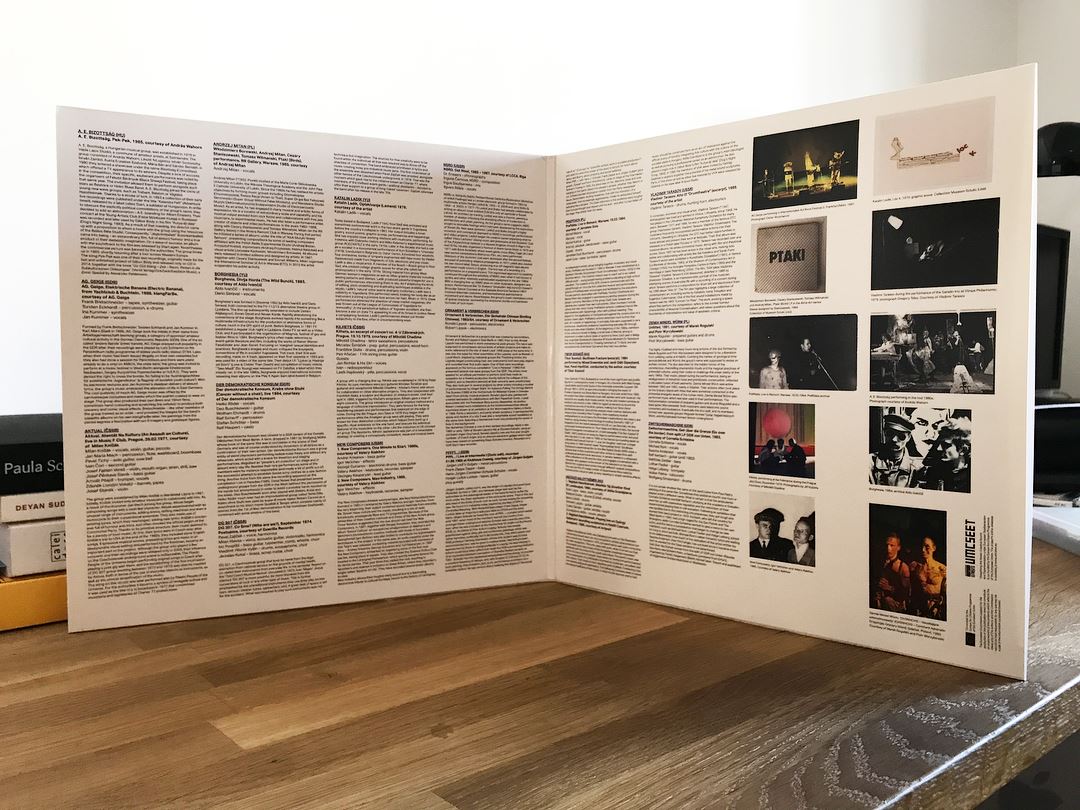
Here, they are accompanied by essays that describe their origins and give hints for the search of undiscovered treasures in these Eastern areas still (almost) devoid of hype.
This compilation signals the coming together of four different projects which have been covering overlooked histories and alternative art in the former Eastern Bloc and Yugoslavia in the second half of the 20th century: Germany’s Major Label and Zonic platform, Poland’s Notes From the Underground exhibition and Portugal’s Unearthing the Music project.